Aşıklı Höyük: Where Settled Life in Anatolia Began
Explore Aşıklı Höyük, one of the earliest Neolithic settlements in Anatolia, revealing the first steps of settled life, fire, and community.
Aşıklı Höyük
Most places in Cappadocia pull your gaze upward — toward rock formations, carved churches, dramatic landscapes. Aşıklı Höyük does the opposite. It draws your attention downward. Into the ground. And eventually, inward.
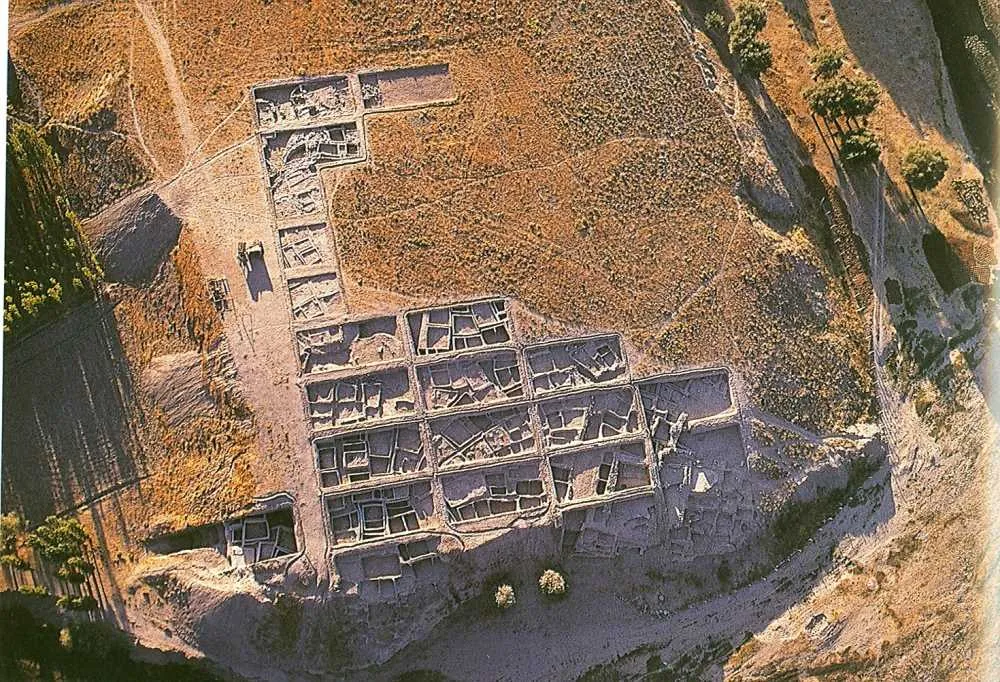
At first glance, Aşıklı Höyük doesn’t look impressive. There are no monumental buildings, no dramatic silhouettes. Just a flat area, excavation traces, modest stone and mudbrick remains. And yet, this simplicity is exactly what gives the site its weight. This is not history refined and polished — this is history at the moment it begins.
Aşıklı Höyük is one of the earliest known settlements in Central Anatolia. The story here doesn’t start with organized cities or complex belief systems. It begins with people who are still learning how to stay in one place. Learning through trial and error. Learning how to build, how to control fire, how to coexist with animals, and how to live side by side without fully knowing what that means yet.
What you feel most strongly at Aşıklı Höyük is uncertainty. These people still carry the instincts of hunter-gatherers, but they are slowly shifting toward a settled life. Houses are small, layouts are simple, and what we would call “streets” barely exist. Everything is close, almost crowded — because the idea of structured community is still forming.
That closeness makes the site feel honest. The walls weren’t built for beauty; they were built to keep the cold out. Hearths weren’t symbolic; they were essential. Spaces weren’t sacred because of belief, but because of necessity. Aşıklı Höyük shows a phase where humans are not romanticizing nature — they are negotiating with it.
One of the most striking discoveries here relates to the human body itself. Skeletal remains from the site include evidence of one of the earliest known brain surgeries. This alone says a lot. Knowledge may have been limited, but curiosity was not. Even at the very beginning of settled life, humans were willing to experiment, to intervene, to try to heal.
Time behaves differently at Aşıklı Höyük. Layers upon layers of life exist in the same space. Houses were built, abandoned, rebuilt — again and again. What you see today isn’t a single moment frozen in time, but hundreds of lives compressed into one mound. The site feels less like a ruin and more like an accumulation of human decisions.
Perhaps the most powerful thing about Aşıklı Höyük is this: it belongs to a humanity that hasn’t learned how to tell its story yet. There is no writing, no monument, no grand statement. But there are choices — to stay, to share space, to produce, to take risks. The quiet, foundational steps of what we now call civilization happened here.
Leaving Aşıklı Höyük, you don’t feel impressed — you feel grounded. Because this place doesn’t ask “how far have we come?” It asks something heavier: “where did we begin?” And that question tends to stay with you longer.